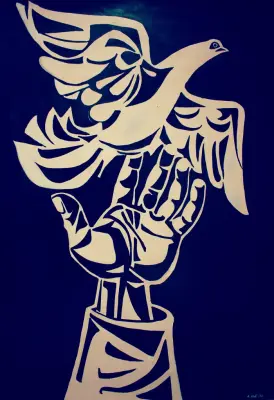
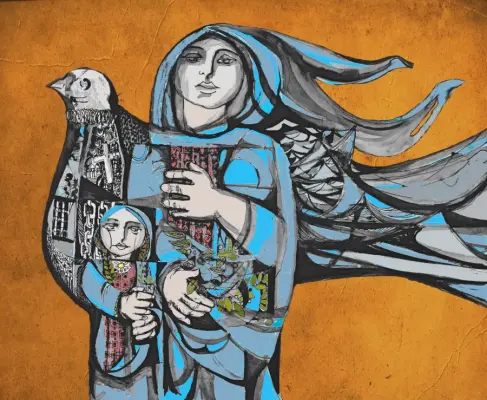
Abed Abdi Retrospective 2027
Tel Aviv Museum of Art

Abed Abdi

Retrospective 2027
11 January 2027 · Tel Aviv
The Exhibition

Seven decades of creation.

A major retrospective tracing the artistic journey of Abed Abdi across painting, drawing, printmaking, illustration, public art and visual memory.

From his early years in Haifa and his studies in Dresden to his work in the press, public art, monuments, landscapes and later explorations of memory and war, the exhibition brings together different periods, media and forms of expression across his career.
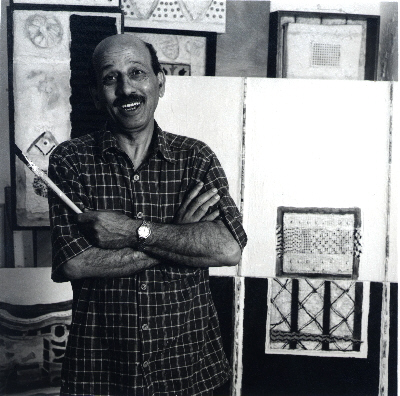
Museum
Tel Aviv Museum of Art
Address
27 Shaul HaMelech Blvd.
The Golda Meir Cultural and Art Center
Tel Aviv–Jaffa
Curated by
Kobi Ben Meir
Fadi Far
Opening
11 January 2027
Abed Abdi
Abed Abdi
The Artist

A pioneering Palestinian visual artist.

Abed Abdi has developed a distinctive visual language shaped by history, place, human experience and social reality. His work moves between intimate observation and large public narratives, combining painting, drawing, graphic art, illustration, printmaking, monuments and environmental works.

Born in Haifa in 1942, Abdi left the city with his family in 1948 and later studied fine arts in Dresden, where he developed his artistic practice under the influence of teachers including Lea Grundig.

His work has been honored by his native city, by Israeli cultural institutions and ministers, and by the President of Palestine.

Across his career, images of refugees, exile, homeland, destroyed villages, refugee camps and Land Day became recurring elements in his visual vocabulary.

“His contribution to the visual culture of the Palestinian minority is unprecedented.”
Jury comment, Israeli Minister of Culture’s Awards for the Arts, 2010
Artistic Lineage

A visual language carried across generations.

Abdi's engagement with war, displacement and human suffering belongs to a wider European and international tradition of socially engaged art.

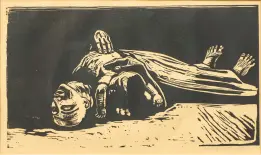
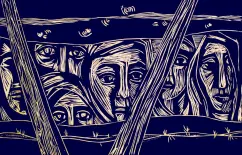
Käthe Kollwitz stands as one important point of reference in this lineage. In Dresden, Abdi studied under Lea Grundig, whose own work was deeply shaped by anti-war, social and humanist concerns.

The relationship between generations of artists, teachers and students became part of Abdi's own artistic formation — not as imitation, but as a continuing conversation about art, society and the human condition.
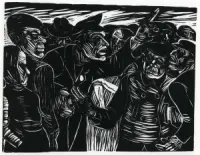
Käthe Kollwitz
Lea Grundig
Abed Abdi
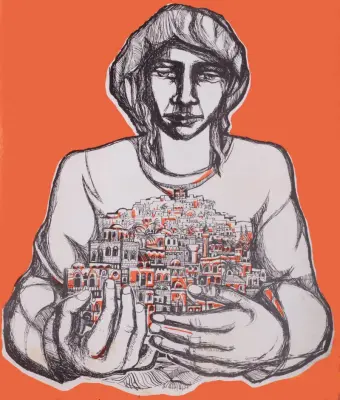
Selected artwork by Abed Abdi
Selected Work

Images that became memory.

A selection of works representing different periods, media and themes across Abdi's career.

Seven Decades

A life in art.

1955–2026
Abed Abdi, 1955–1964 Haifa
1955–1964 · Haifa
Early Years
The formative years in Haifa and the beginnings of Abdi's artistic development.
Abed Abdi, 1965–1971 Germany
1965–1971 · Germany
Studies
Fine arts studies in Dresden, including mural and graphic art, and the artistic influence of teachers including Lea Grundig.
Abed Abdi, 1972–1982 press work
1972–1982
Illustrator for the Communist Press
Graphic design, illustration and political cartooning for the Communist press, including Al-Ittihad and Al-Jadid.
Abed Abdi Land Day Monument
1977 · Land Day
Land Day Monument
The Land Day monument became one of the major public works associated with Abdi's artistic engagement with collective memory.
Abed Abdi public works
1980s onward
Other Public Works
Murals, monuments and environmental works created for public spaces and communities.
Abed Abdi, 1990s–2020s
1990s–2020s
Expanding the Visual Vocabulary
Painting, drawing, illustration, public art and increasingly diverse approaches to memory, place and contemporary reality.
Abed Abdi Memory Drawers
Recent Years
Memory Drawers Series
Found and discarded drawers transformed into intimate objects of memory, carrying fragments of personal and collective histories.
Abed Abdi Gaza artworks
Recent Works
Gaza Artworks
Recent works responding to destruction, suffering, loss and the continuing human consequences of war.
Curated by
Kobi Ben Meir · Fadi Far
The Retrospective

The book and the film.

01

The Book

A major trilingual publication accompanying the retrospective, bringing together scholarship, biography, reproductions and archival material.

Explore the Book
02

The Film

A documentary portrait tracing Abed Abdi's life, artistic journey, memories and relationship to the places and people that shaped his work.

Watch the Film
1400+
700+ articles
The Archive

Explore the complete world of Abed Abdi.

Abed Abdi's official website and online archive brings together artworks created from 1955 until today, alongside exhibitions, publications, press material, archived photographs, videos and other documents relating to Abdi's artistic life and career.
Collect the Work

Limited Edition Prints

Selected works from Abed Abdi's career are available as museum-quality limited edition giclée prints on acid-free canvas and on paper. Each edition is signed and numbered and accompanied by a special certificate.
My Homeland — Abed Abdi limited edition print

My Homeland

Limited edition print

View Print
Give Peace a Chance — Abed Abdi limited edition print

Give Peace a Chance

Limited edition print

View Print
Solidarity — Abed Abdi limited edition print

Solidarity

Limited edition print

View Print
Explore All Limited Edition Prints →
style> /* ========================================================= BASE ========================================================= */ #abdi-retrospective { --paper: #ede7dd; --paper2: #e5ddd2; --paper3: #ded5ca; --dark: #2a2a2a; --dark2: #29231f; --muted: #766e66; --line: rgba(42,42,42,.18); --accent: #c5a56a; font-family: Arial, Helvetica, sans-serif; background: var(--paper); color: var(--dark); } #abdi-retrospective * { box-sizing: border-box; } #abdi-retrospective section { padding: 110px 0; } #abdi-retrospective .abdi-section-inner { width: min(1400px, calc(100% - 56px)); margin: 0 auto; } #abdi-retrospective .abdi-eyebrow { font-size: 10px; letter-spacing: .18em; text-transform: uppercase; color: var(--muted); margin-bottom: 18px; } #abdi-retrospective .abdi-section-title { font-family: Georgia, "Times New Roman", serif; font-size: clamp(46px, 6vw, 82px); line-height: .98; font-weight: 400; letter-spacing: -.04em; color: var(--dark); margin: 0 0 35px; } #abdi-retrospective p { font-size: 16px; line-height: 1.8; } /* ========================================================= PAGE HEADER ========================================================= */ #abdi-retrospective .abdi-page-header { height: 58px; display: flex; align-items: center; padding: 0 28px; background: var(--paper); color: var(--dark); font-size: 12px; letter-spacing: .12em; text-transform: uppercase; } /* ========================================================= HERO ========================================================= */ #abdi-retrospective .abdi-hero { min-height: 760px; position: relative; display: flex; align-items: stretch; color: #fff; background: linear-gradient( 90deg, rgba(0,0,0,.18) 0%, rgba(0,0,0,.08) 52%, rgba(0,0,0,.16) 100% ), url("/wp-content/uploads/2025/09/abedabdi8787.webp") center center / cover no-repeat; } #abdi-retrospective .abdi-hero-inner { width: min(1400px, calc(100% - 56px)); min-height: 760px; margin: 0 auto; display: flex; flex-direction: column; justify-content: center; padding: 90px 0 120px; position: relative; } #abdi-retrospective .abdi-language-bar { position: absolute; top: 32px; right: 0; display: flex; align-items: center; gap: 14px; z-index: 10; font-size: 15px; line-height: 1.2; } #abdi-retrospective .abdi-language-bar a { color: #fff; text-decoration: none; font-size: 19px; font-weight: 800; transition: color .2s ease, opacity .2s ease; } #abdi-retrospective .abdi-language-bar a:hover, #abdi-retrospective .abdi-language-bar a:focus { color: #fff; opacity: .65; } #abdi-retrospective .abdi-language-bar a.active { font-weight: 500; } #abdi-retrospective .abdi-language-separator { color: rgba(255,255,255,.65); font-size: 15px; } #abdi-retrospective .abdi-hero-institution { font-size: 15px; letter-spacing: .18em; text-transform: uppercase; margin-bottom: 30px; opacity: .9; } #abdi-retrospective .abdi-hero-name { font-family: Georgia, "Times New Roman", serif; font-size: clamp(96px, 13vw, 190px); line-height: .78; letter-spacing: -.055em; margin: 0; font-weight: 400; color: #000000; -webkit-text-fill-color: #000000; -webkit-text-stroke: 3px #ffffff; text-shadow: 0 0 2px #ffffff, 0 0 7px rgba(255,255,255,.95), 0 0 16px rgba(255,255,255,.85); } #abdi-retrospective .abdi-hero-name span { display: block; } #abdi-retrospective .abdi-hero-retro { font-family: Georgia, "Times New Roman", serif; font-size: clamp(30px, 4vw, 58px); font-weight: 400; margin: 42px 0 10px; } #abdi-retrospective .abdi-hero-date { font-size: 14px; letter-spacing: .13em; text-transform: uppercase; opacity: .9; } #abdi-retrospective .hero-bottom { position: absolute; bottom: 42px; left: 0; right: 0; text-align: center; } #abdi-retrospective .hero-button { display: inline-flex; align-items: center; gap: 18px; color: #fff; border: 1px solid rgba(255,255,255,.7); padding: 14px 24px; text-decoration: none; font-size: 15px; letter-spacing: .16em; text-transform: uppercase; transition: background .2s ease, color .2s ease; } #abdi-retrospective .hero-button:hover, #abdi-retrospective .hero-button:focus { background: #fff; color: var(--dark); } /* ========================================================= EXHIBITION ========================================================= */ #abdi-retrospective .exhibition-grid { display: grid; grid-template-columns: 1.25fr .75fr; gap: 100px; align-items: start; } #abdi-retrospective .exhibition-meta { border-top: 1px solid var(--line); padding-top: 0; } #abdi-retrospective .exhibition-meta-block { padding: 24px 0; border-bottom: 1px solid var(--line); } #abdi-retrospective .exhibition-meta-label { color: var(--muted); font-size: 10px; text-transform: uppercase; letter-spacing: .16em; margin-bottom: 9px; } #abdi-retrospective .exhibition-meta-main { font-family: Georgia, "Times New Roman", serif; font-size: 24px; line-height: 1.3; color: var(--dark); } #abdi-retrospective .exhibition-meta-secondary { color: var(--muted); font-size: 13px; line-height: 1.6; margin-top: 6px; } #abdi-retrospective .exhibition-meta-secondary a { color: var(--dark); text-decoration: none; border-bottom: 1px solid rgba(42,42,42,.35); transition: border-color .2s ease; } #abdi-retrospective .exhibition-meta-secondary a:hover, #abdi-retrospective .exhibition-meta-secondary a:focus { border-color: var(--accent); } #abdi-retrospective .exhibition-opening { font-family: Georgia, "Times New Roman", serif; font-size: 36px; color: var(--dark); }/* =========================================================

Abed Abdi

Retrospective 2027
11 January 2027 · Tel Aviv
The Exhibition

Seven decades of artistic creation.

A major retrospective spanning seven decades of Abed Abdi’s artistic career, exploring his enduring engagement with people, place, history and collective memory.

From his early years in Haifa and his studies in Dresden to his years of work in the press and his later public monuments, environmental sculptures and explorations of war and memory, the exhibition follows the evolution of an artist whose work has remained deeply connected to the social and political realities of his time.

Museum
Tel Aviv Museum of Art
Address
27 Shaul HaMelech Blvd.
Tel Aviv–Jaffa
Curated by
Dr. Kobi Ben Meir
Assisted by Curator Fadi Far
Opening
11 January 2027
The Artist

A pioneering Palestinian visual artist.

Abed Abdi
Abed Abdi

Abed Abdi has developed a distinctive visual language shaped by history, place, human experience and social reality. Throughout his career, his work has moved between intimate observation and large public narratives, combining painting, drawing, graphic art, illustration, printmaking, monuments and environmental works. As a humanist and social-realist artist, he has consistently placed people, their lives, struggles and hopes at the centre of his work.

Born in Haifa in 1942, Abdi left the city with his family in 1948 and lived as a refugee for three years. He held his first exhibition in 1961, and from 1965 to 1971 studied fine arts at the Dresden Academy of Fine Arts (HfBK Dresden), where he developed his artistic practice under the guidance of German Social Realist artists including Gerhard Bondzin and Lea Grundig, a Jewish Holocaust survivor and anti-war artist. Grundig became an important mentor and friend to Abdi, and their relationship extended far beyond the academy.

His work has been honored by his native city, Haifa, by Israeli and Palestinian cultural institutions, by the ministers of culture in Israel and Palestine, and by the President of Palestine.

```
Artistic Lineage

From Haifa to Dresden—and a practice rooted in lived experience.

Abed Abdi’s artistic formation began in Haifa and took a defining turn in Dresden. From 1965 to 1971, he studied fine arts at the Dresden Academy of Fine Arts under Lea Grundig and Gerhard Bondzin.

That education became part of a practice grounded in humanist and social-realist concerns. Across painting, drawing, illustration, printmaking and public art, Abdi has kept people, their lives and their shared histories at the centre of his work.

1942Born in Haifa
1961First exhibition
1965–1971Fine arts studies in Dresden
Selected Works

Images that became collective memory.

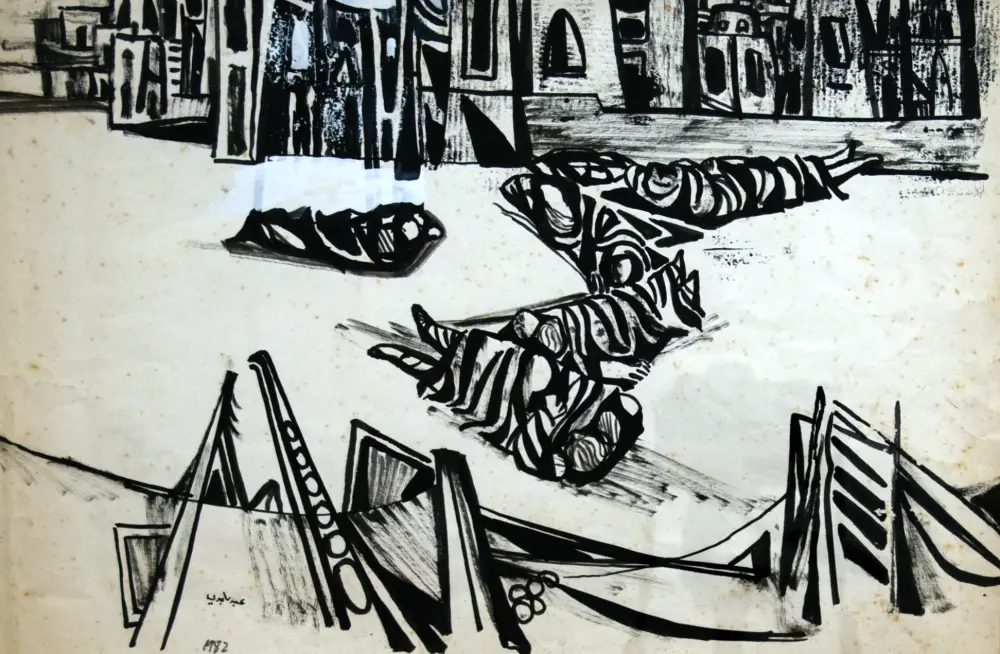
Abed Abdi, Massacre in Eilut, 1982
Abed Abdi, Massacre in Eilut, 1982 (from the Wa Ma Nasina series of illustrations), published in Al Jadeed Journal and Al Ittihad newspaper.

“It is these images that shaped Arab visual memory of historical events like the Nakba, the refugee camps, destroyed villages, and the events of Land Day, hence the works’ significant influence on the collective memory of the Palestinian minority..”

Jury comment, Israeli Minister of Culture’s Awards for the Arts, 2010

1700+ artworks
700+ articles
The Complete Abed Abdi Online Art Archive

Explore the complete world of Abed Abdi.

Abed Abdi's official website and online archive brings together artworks created from 1955 until today, as well as exhibitions, publications, press material, archived photographs, videos and other documents relating to Abdi's artistic life and career.
ABED ABDI LIMITED EDITION PRINTS

Collect a piece of Palestinian art history.

Selected works from Abed Abdi's career are available for online purchase as museum-quality, strictly limited edition giclée prints on acid-free canvas and paper. Each edition is signed and numbered and accompanied by a special certificate of authenticity.
My Homeland — Abed Abdi limited edition print

My Homeland

Limited edition print

View Print
Give Peace a Chance — Abed Abdi limited edition print

Give Peace a Chance

Limited edition print

View Print
Solidarity — Abed Abdi limited edition print

Solidarity

Limited edition print

View Print
Explore All Limited Edition Prints →

GDPR