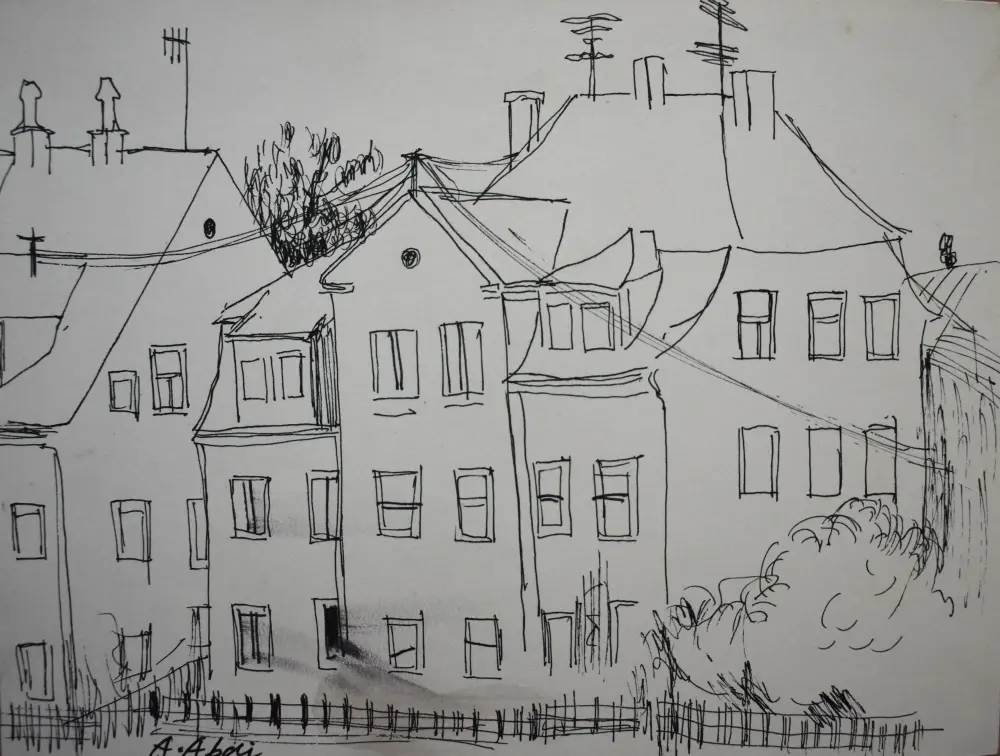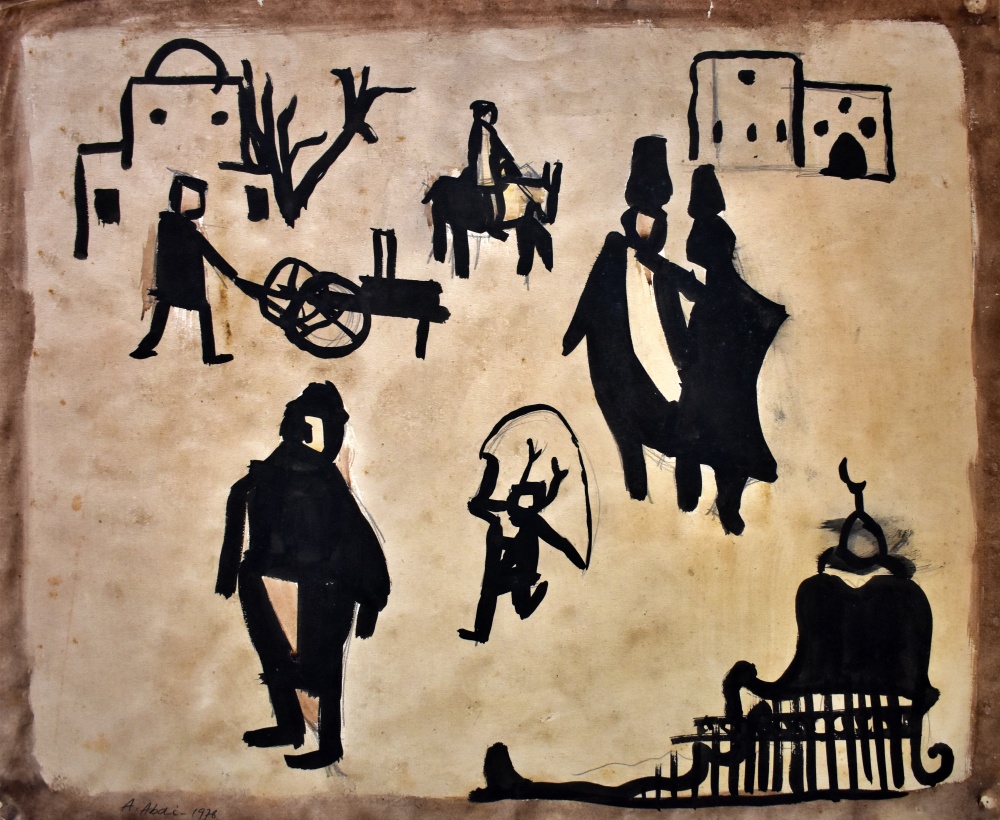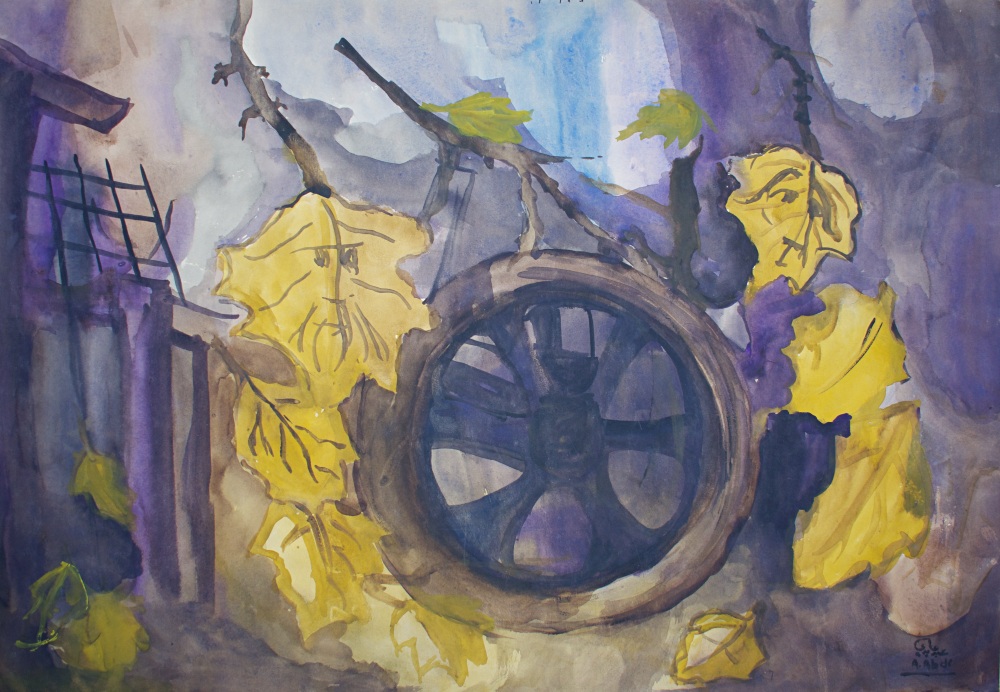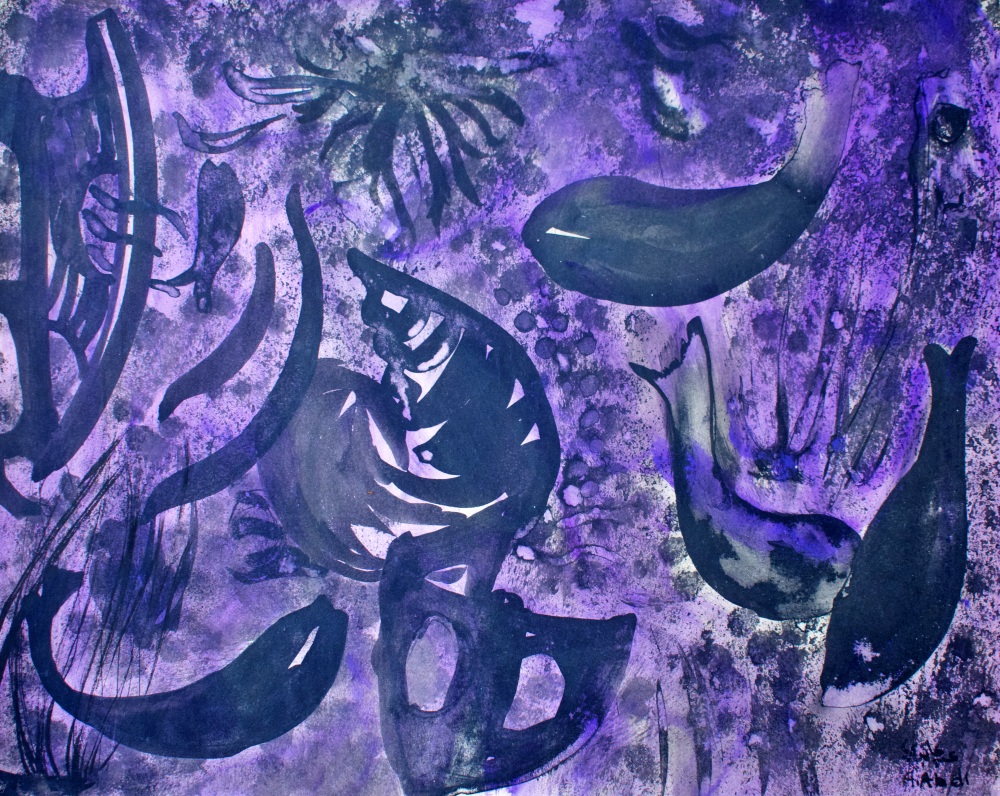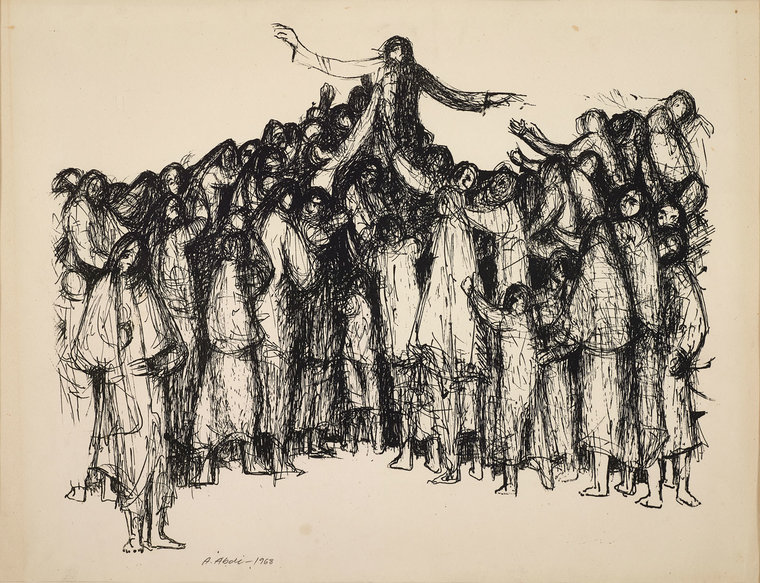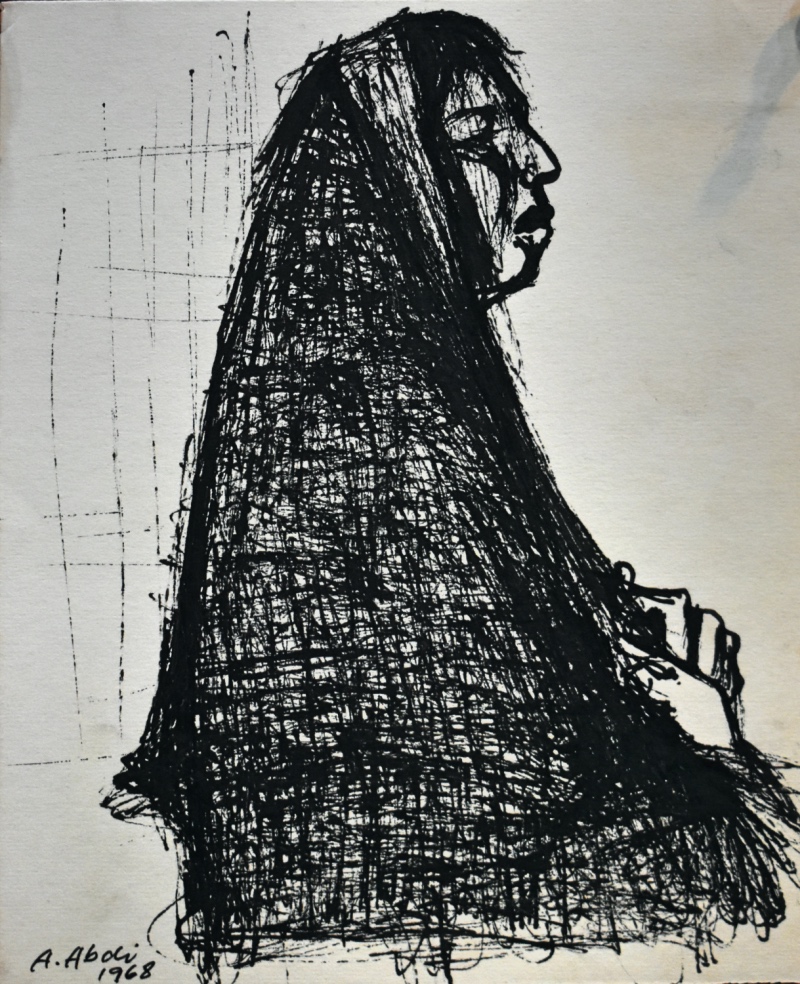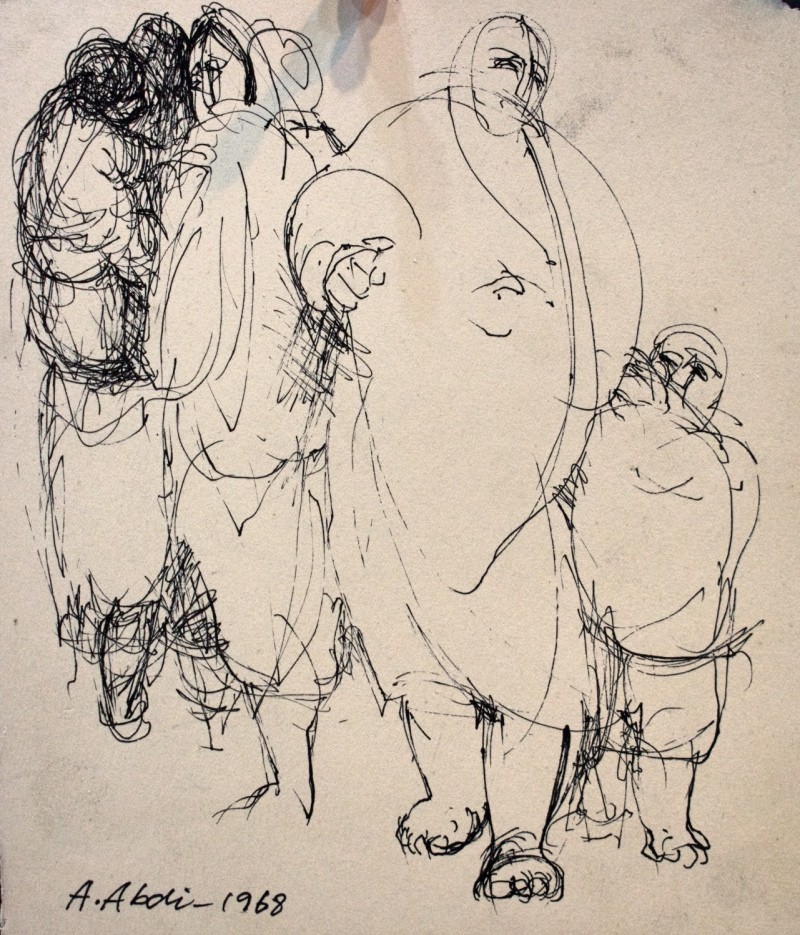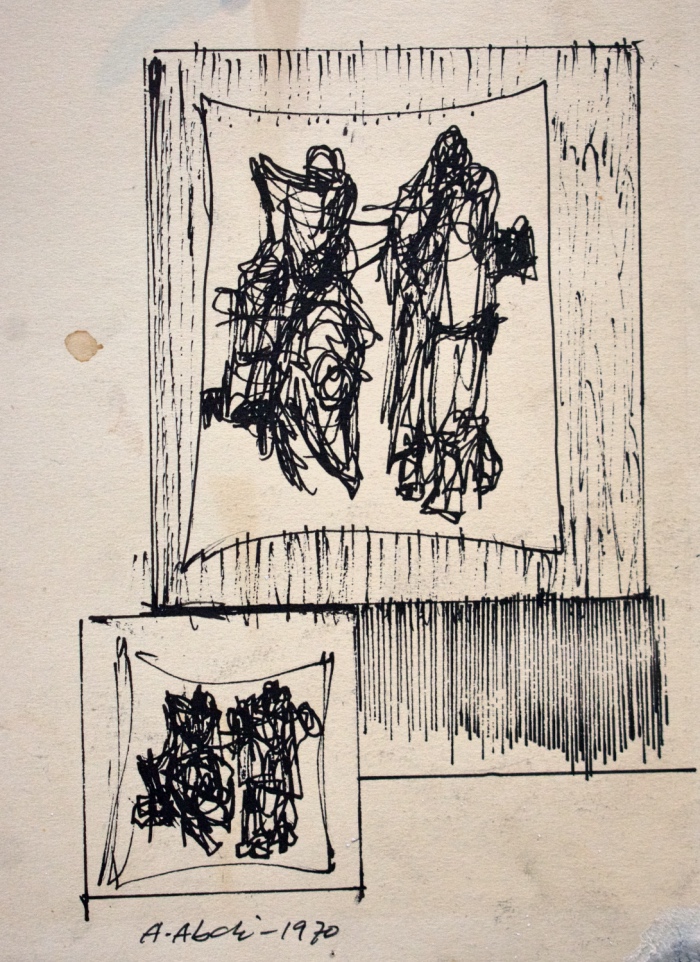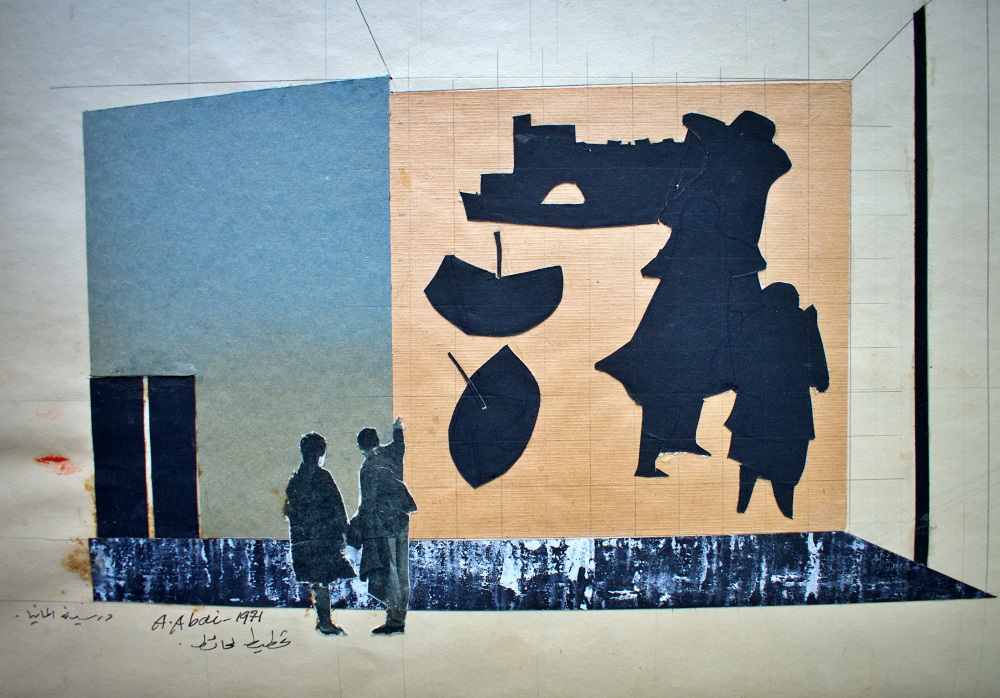
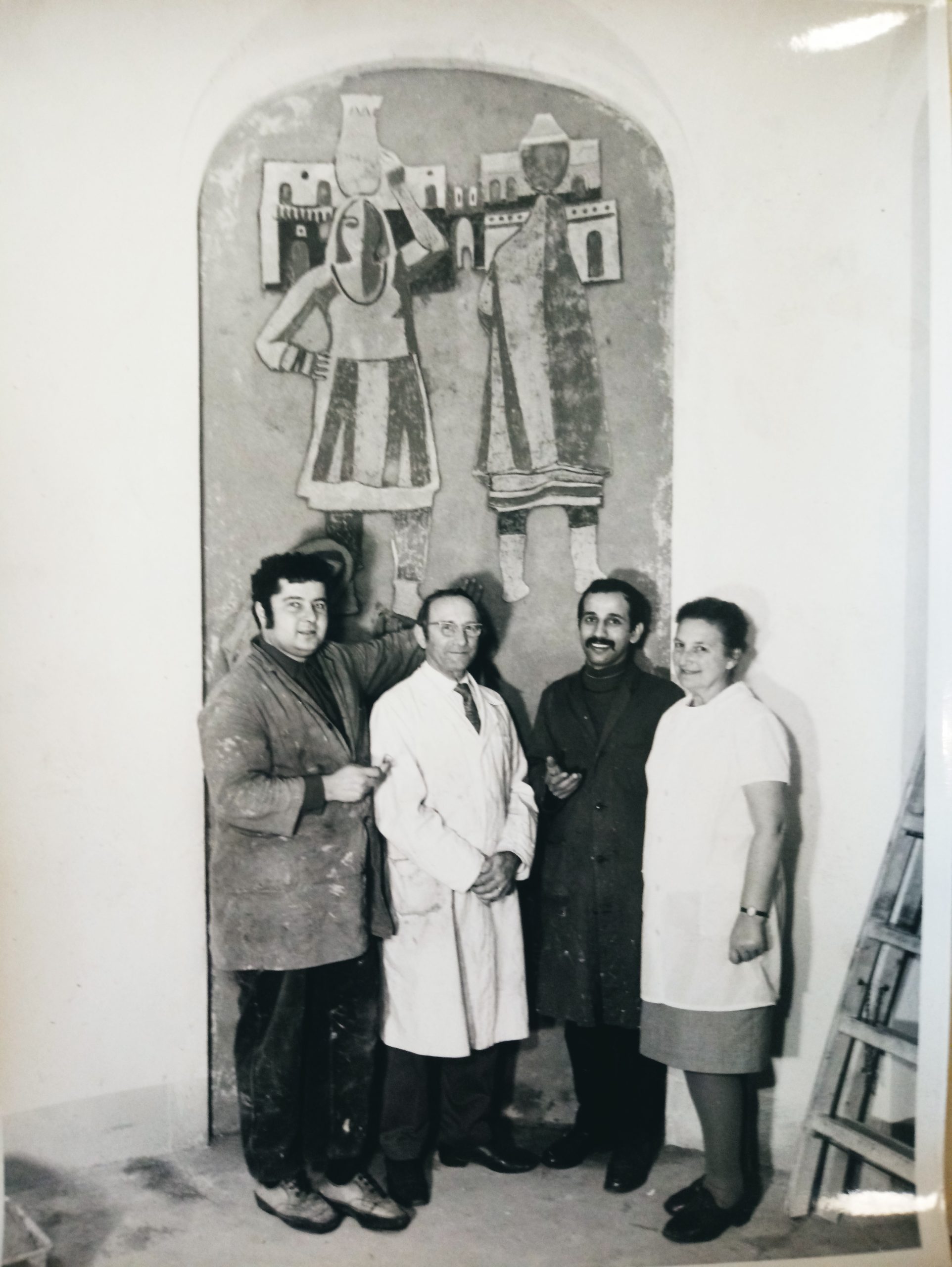
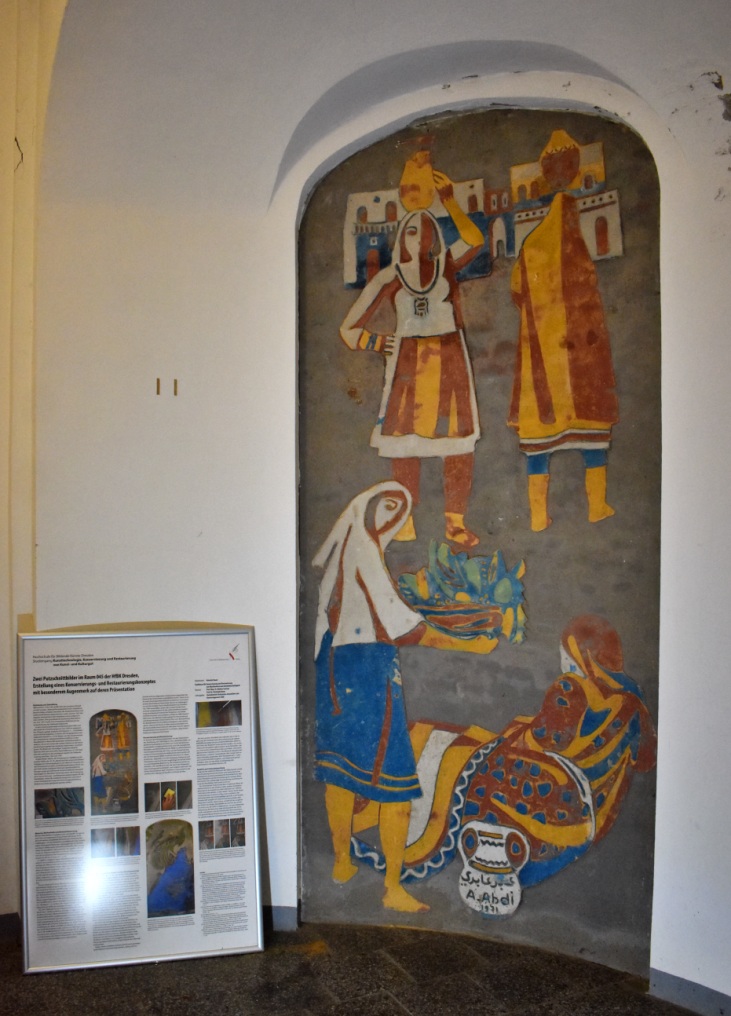
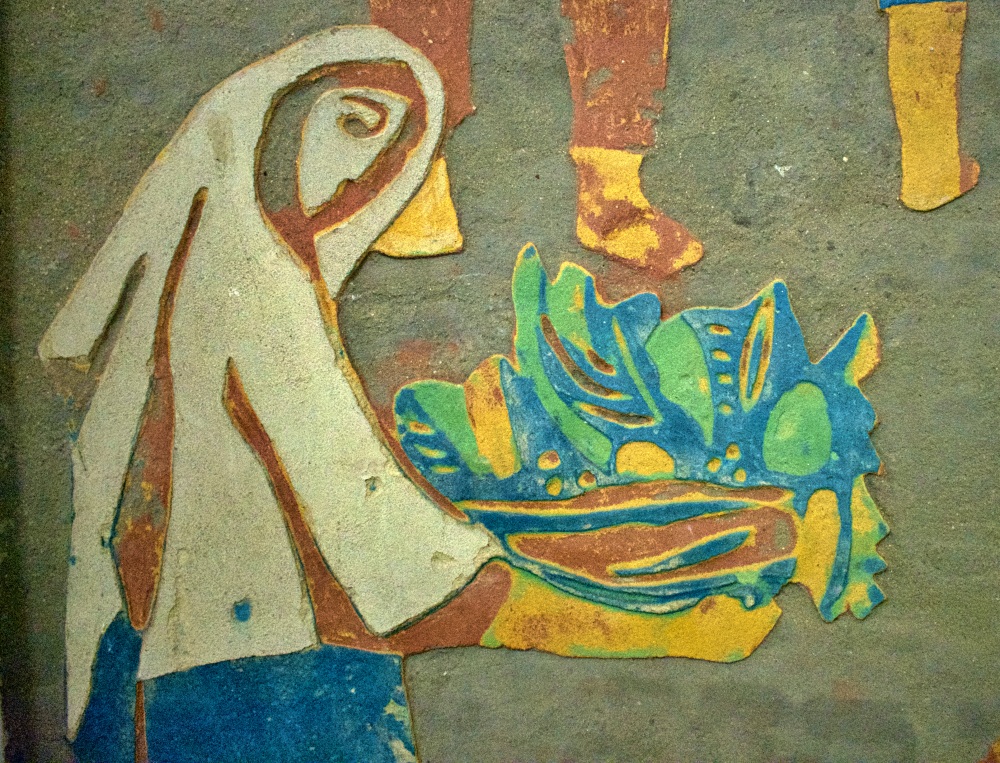
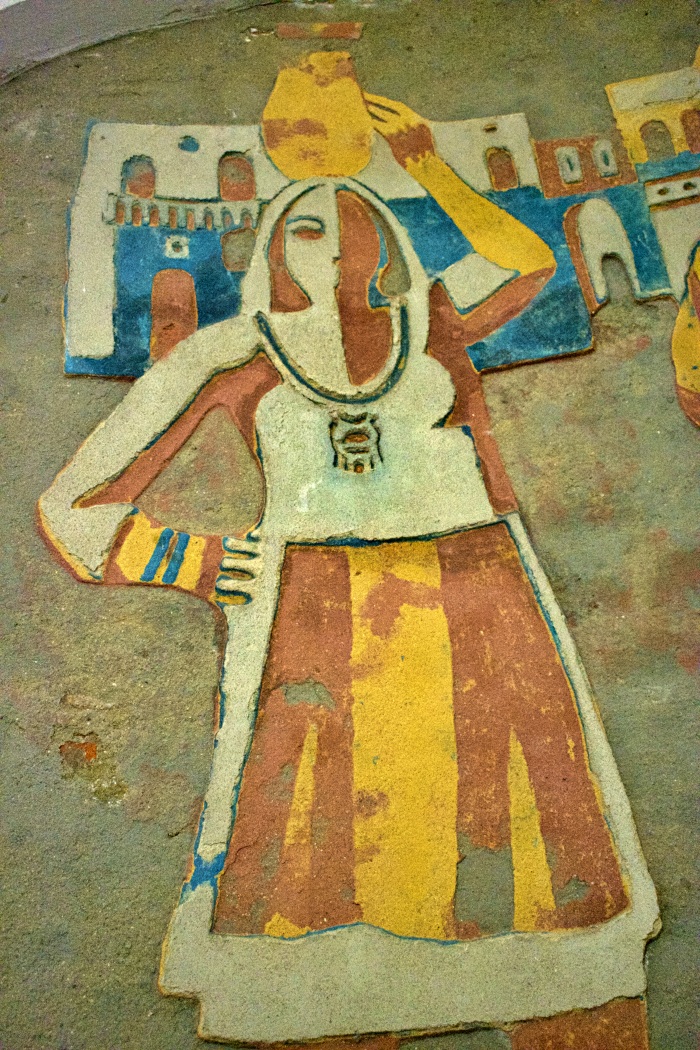
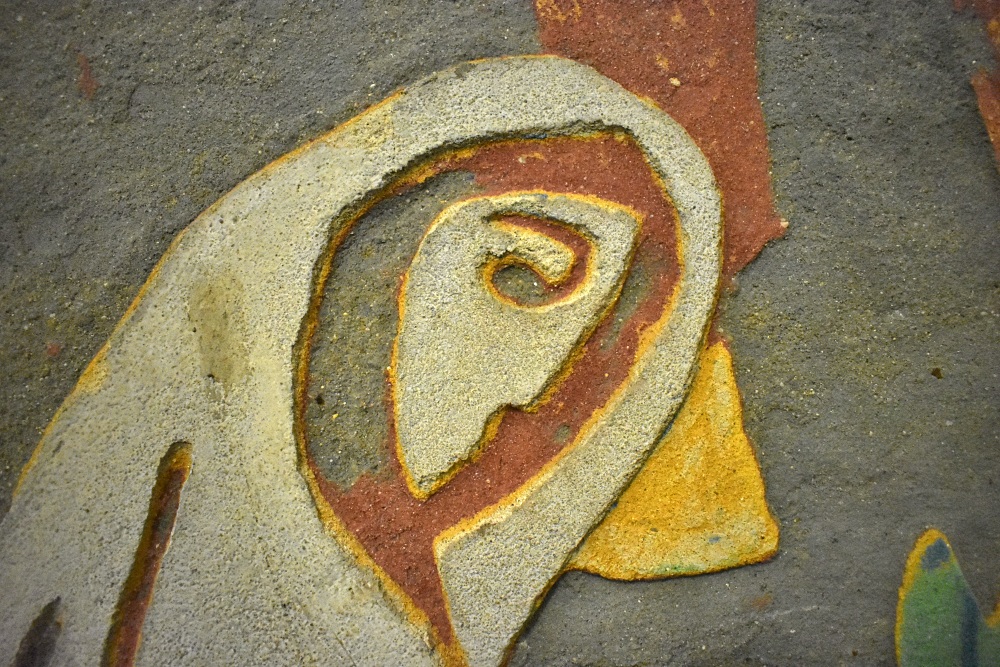
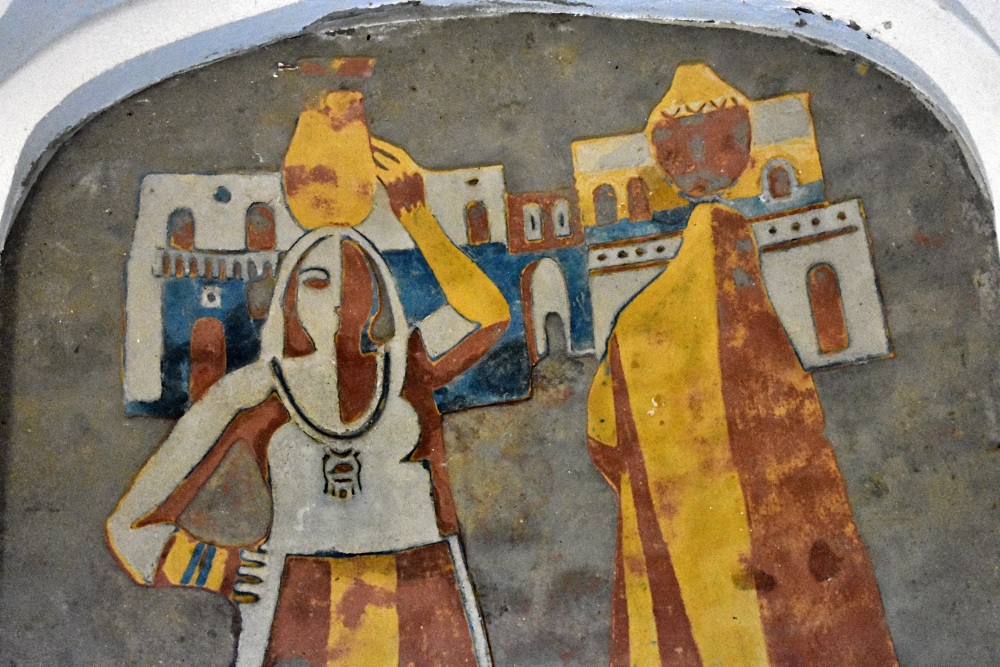
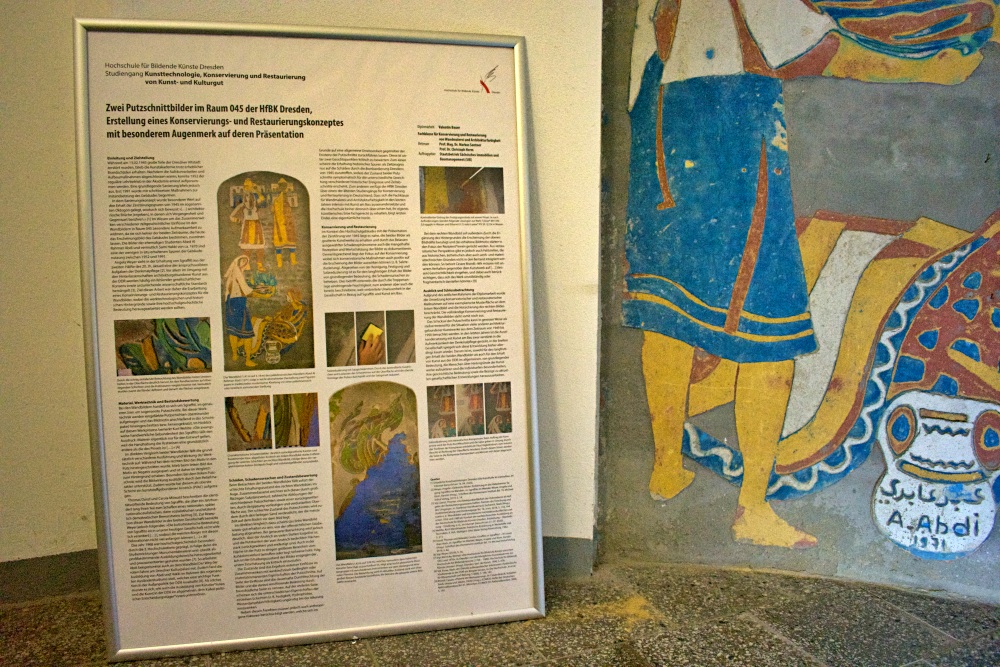
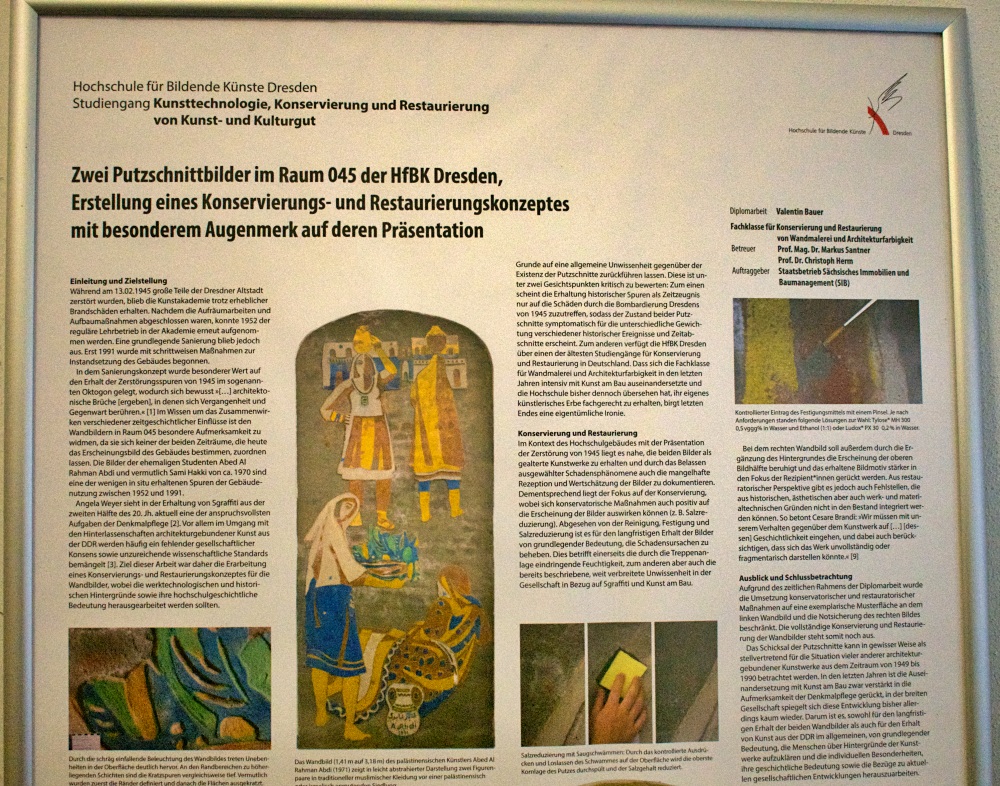
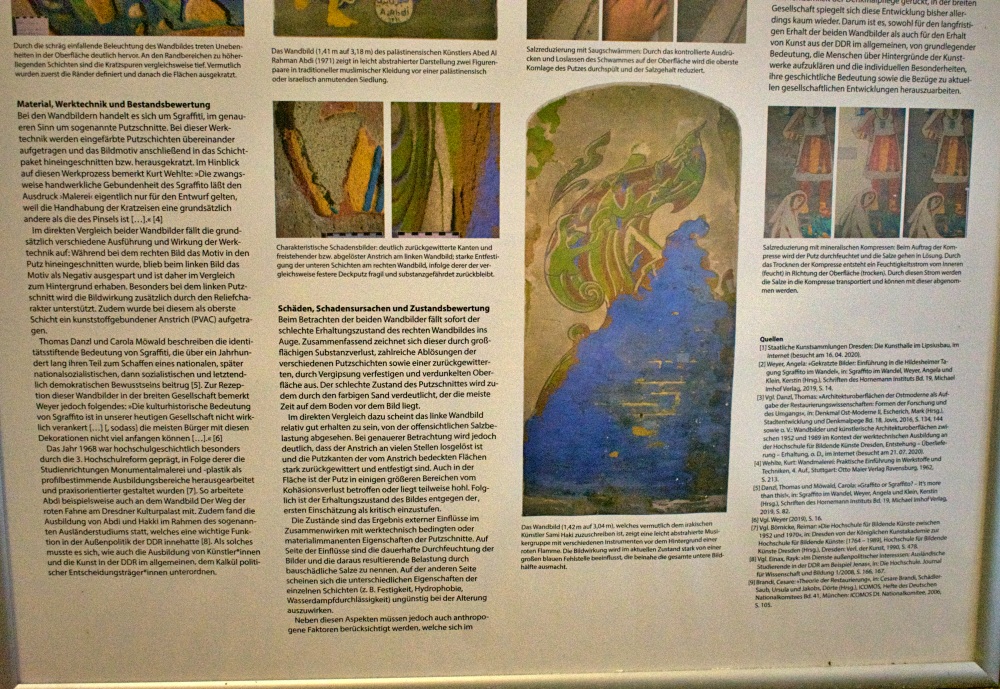
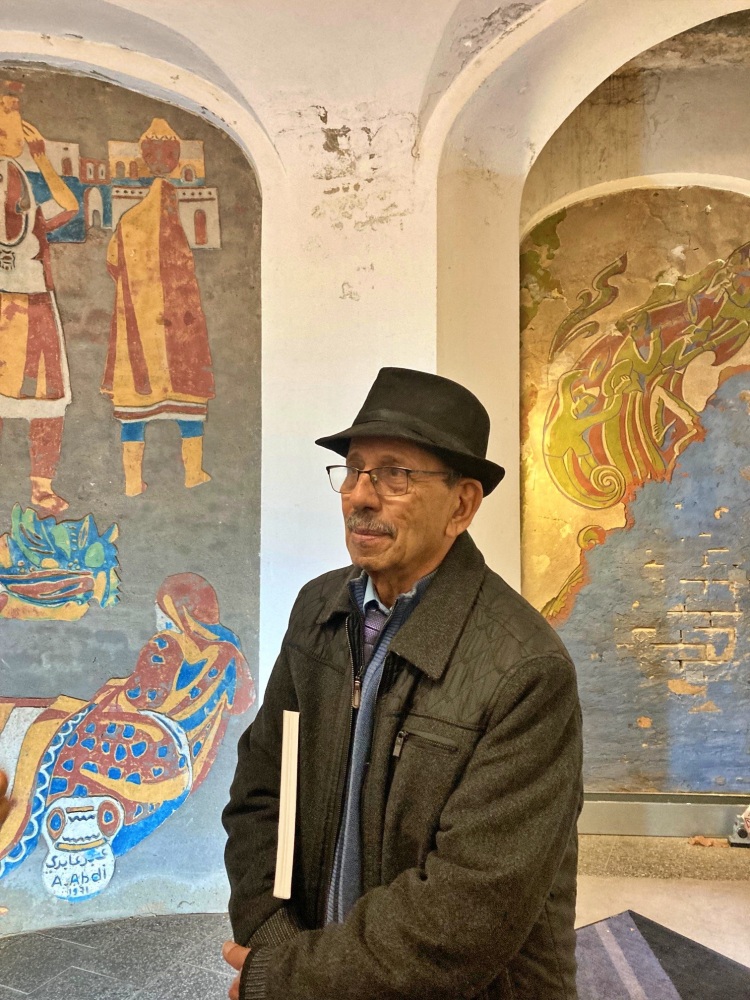
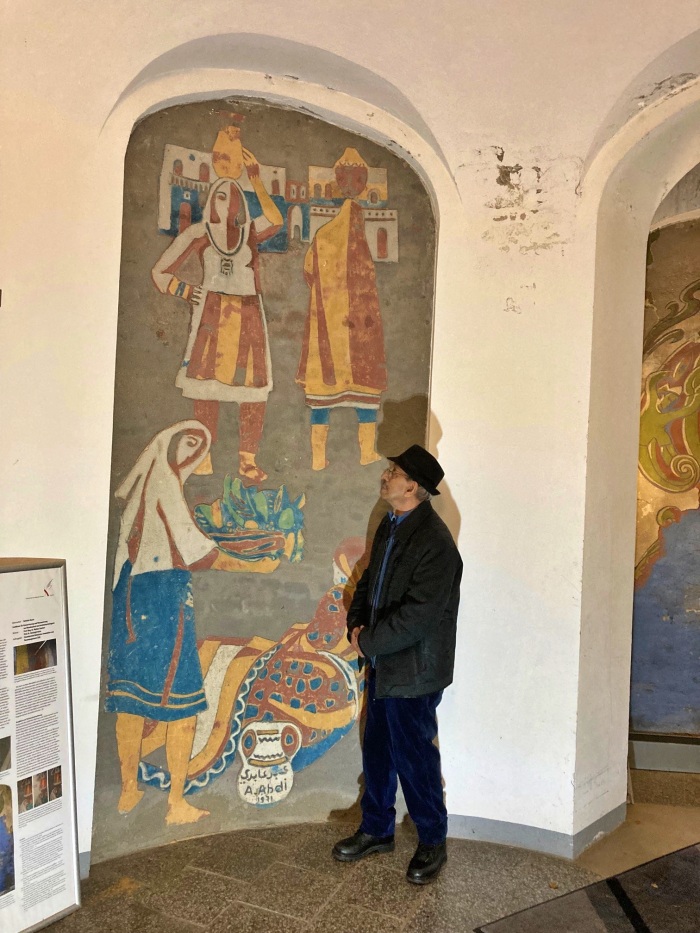
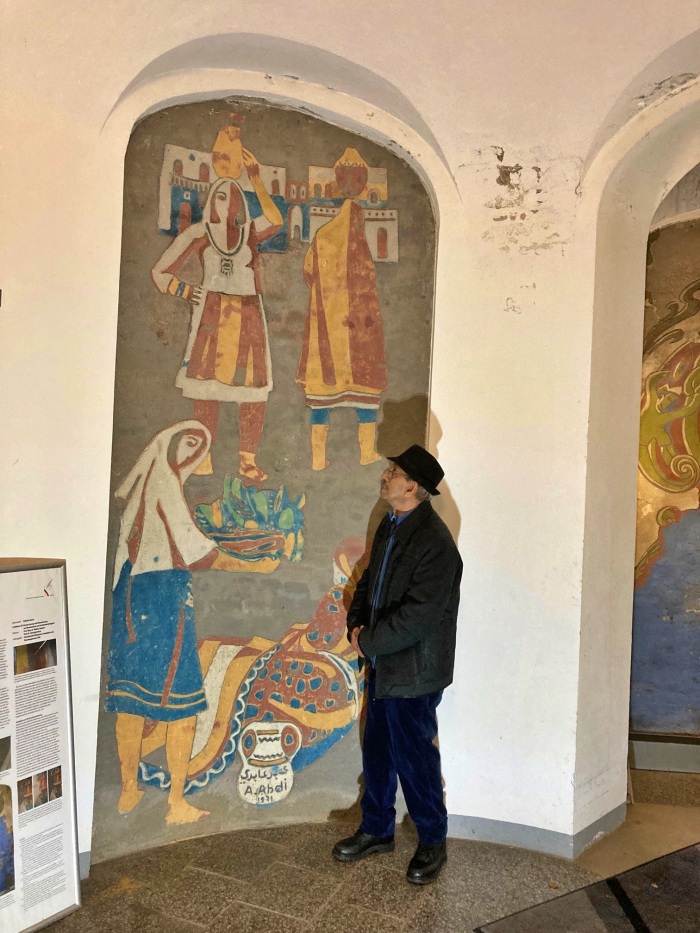
The mural was created in 1971, at the end of Abed Abdi’s studies at Dresden Academy of Arts in Germany, under supervision of Prof. Gerhard Bondzin. In return for this project, Abed Abdi was given an additional 3-month scholarship from the Dresden Academy of Arts.
According to research by the project Art in Networks “between his graduation and his return to Haifa in 1971, he (Abed Abdi) executed a colourful sgrafitto in a building of the HfBK in Dresden. Another sgrafitto was done in the same room by the Iraqi student Sami Hakki. In this second interview Abdi speaks about his art and he tells the story of how the sgrafitto allowed him to marry his wife. Both murals still exist in the HfBK, and were inspected by the conservation specialist Valentin Bauer in 2020.” source
The sgraffito mural is made of soft mud flanks on a wall on the ground floor of the college, and it is in a good position to date.
Sgraffito (Italian: [zɡrafˈfiːto]; plural: sgraffiti; sometimes spelled scraffito) is a technique either of wall decor, produced by applying layers of plaster tinted in contrasting colours to a moistened surface, or in pottery, by applying to an unfired ceramic body two successive layers of contrasting slip or glaze, and then in either case scratching so as to reveal parts of the underlying layer.
Read more on the renovation of this artwork in 2019
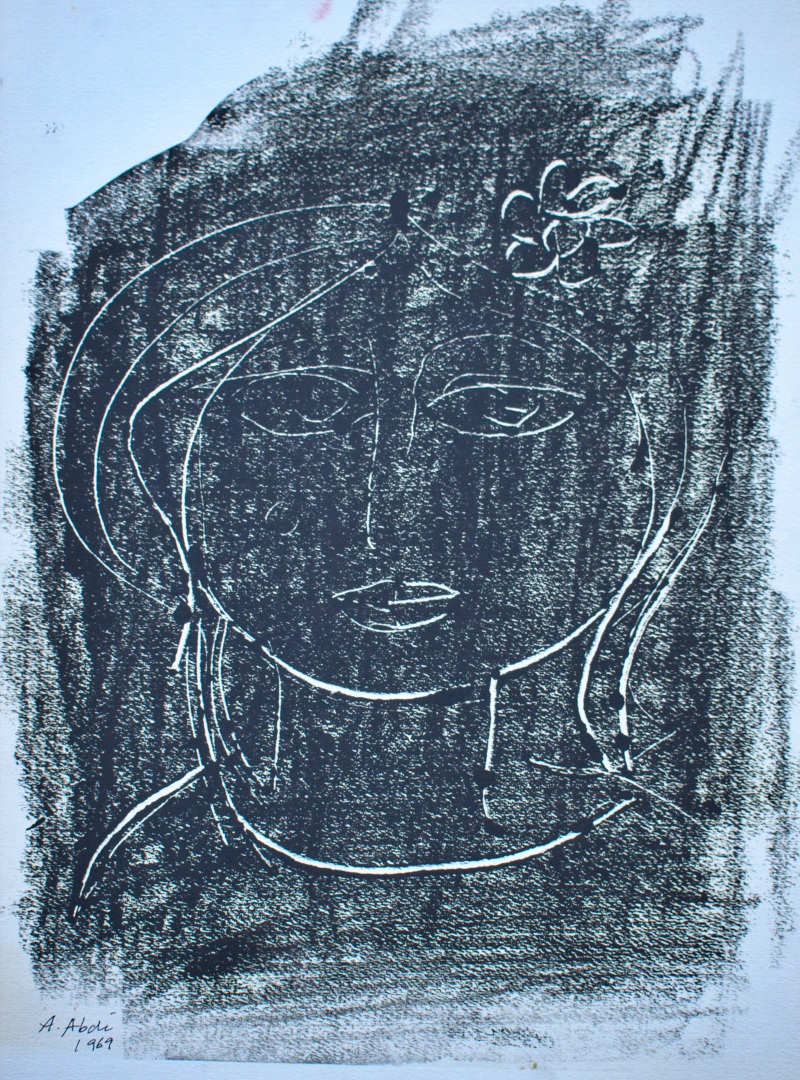
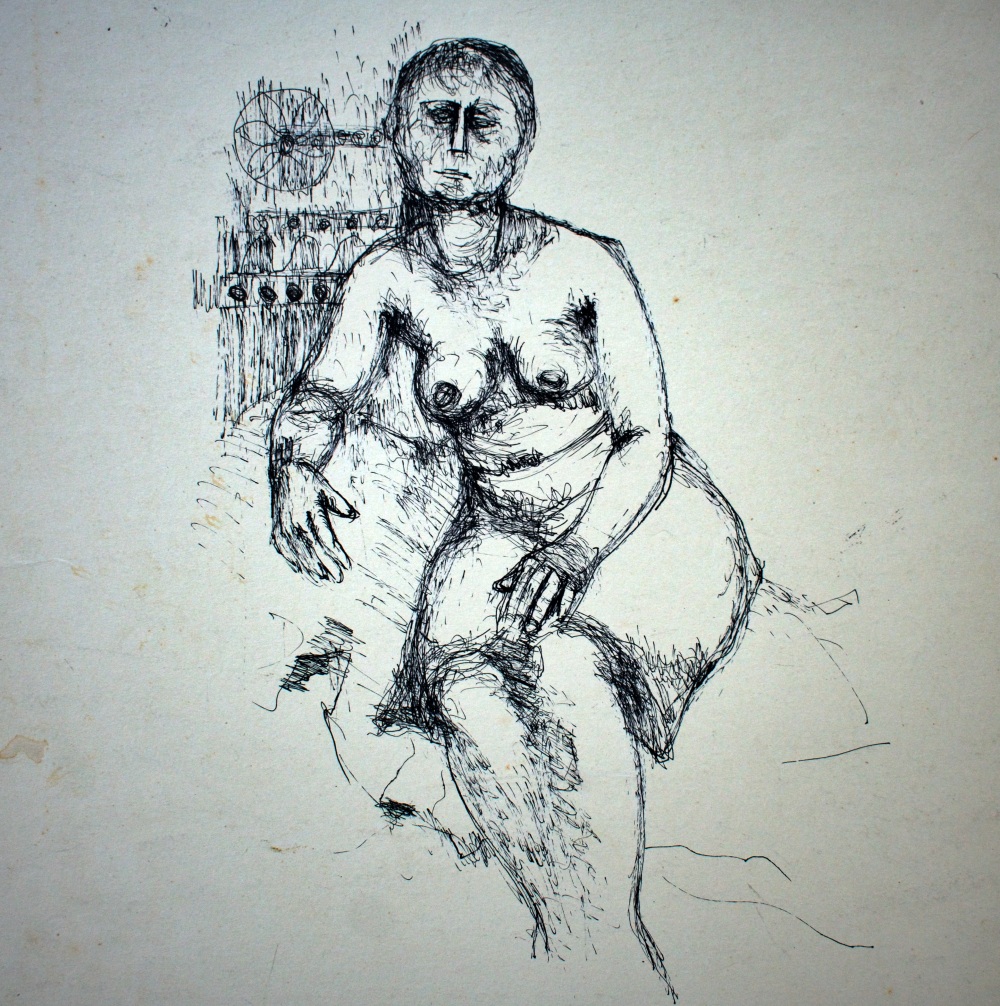
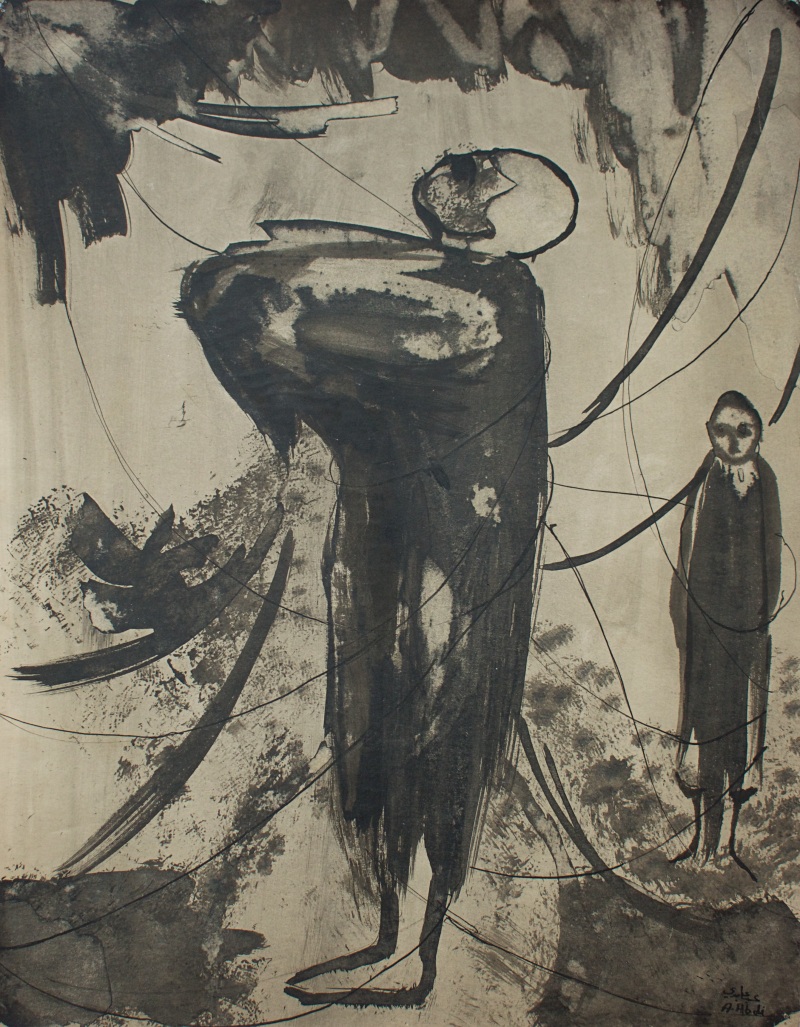
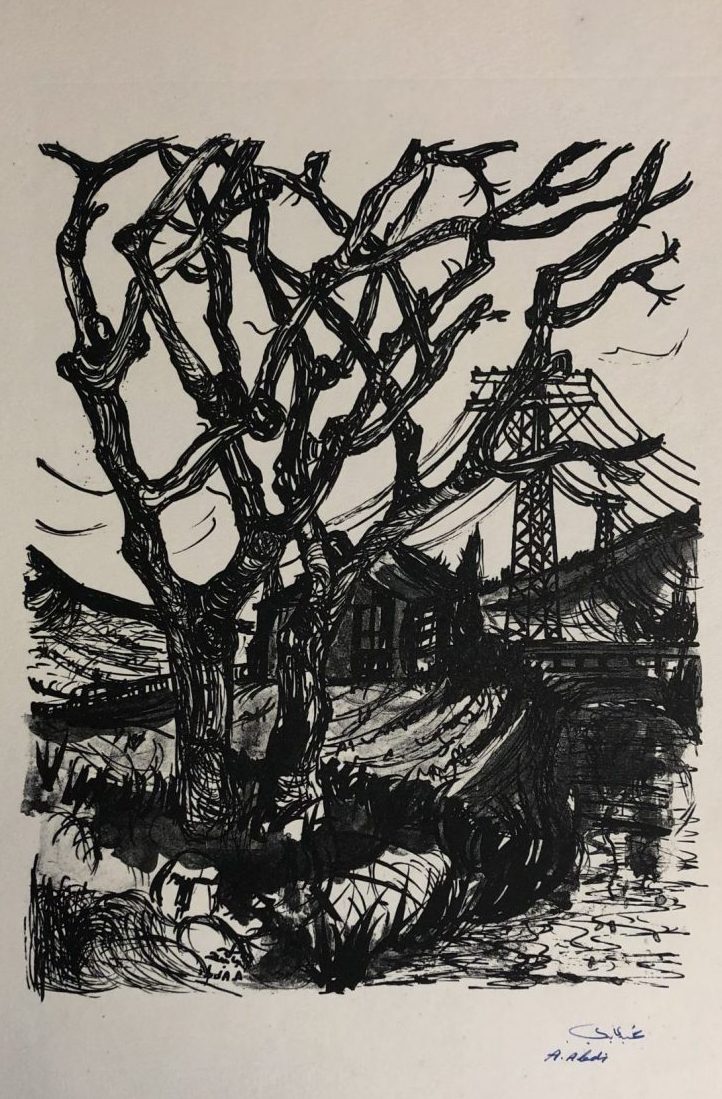
Artworks that directly inspired this mural: